
The Ultimate Guide to Buying a House in Lapland
Everything non-Finnish residents need to know – costs, permits, land, and common mistakesWritten for international buyers planning to build a home in...

From our villa and cottage collection, you will find modern and traditional favorites. We also design models individually.
Explore our individual house models. The PolarHouse house package offers the freedom to customize plans and materials according to your wishes.
3 min read
Builders often worry about two things:
• How much will it cost to heat the house 20 years from now?
• How can construction mistakes be avoided if neither you nor your helpers are building professionals?
We have given a lot of thought to these questions. In this article, we explain how the choice of building material affects both living costs and peace of mind during construction, and why a thermal log wall provides an exceptionally effective answer.
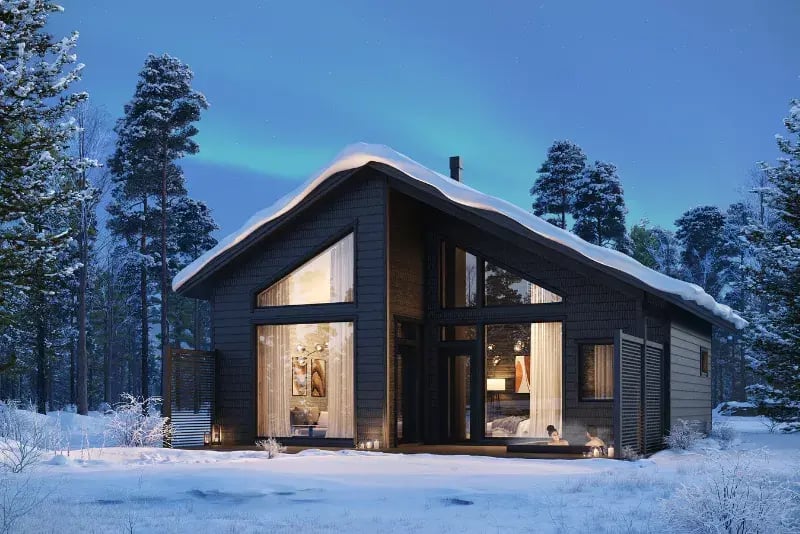
Wood is one of the best building materials available. It is environmentally friendly, energy‑efficient, lightweight and strong. It also improves indoor air quality and increases comfort. However, the key question is not only what the material is, but how it is used in the wall structure.
How do solid or laminated logs behave over time? What exactly is a thermal log, and how does it differ from traditional log solutions?
Traditional log houses are built from horizontal logs stacked on top of each other. The structure is beautiful and timeless, but it has an inherent characteristic: logs settle.
Solid logs can compress 3–5 cm per metre of wall height because of moisture changes and structural loads. Laminated logs settle less, typically around 1 cm per metre, but they are not completely settlement‑free.
For this reason, all horizontal log structures require special details, such as expansion allowances, movement joints and special design for window and door openings.
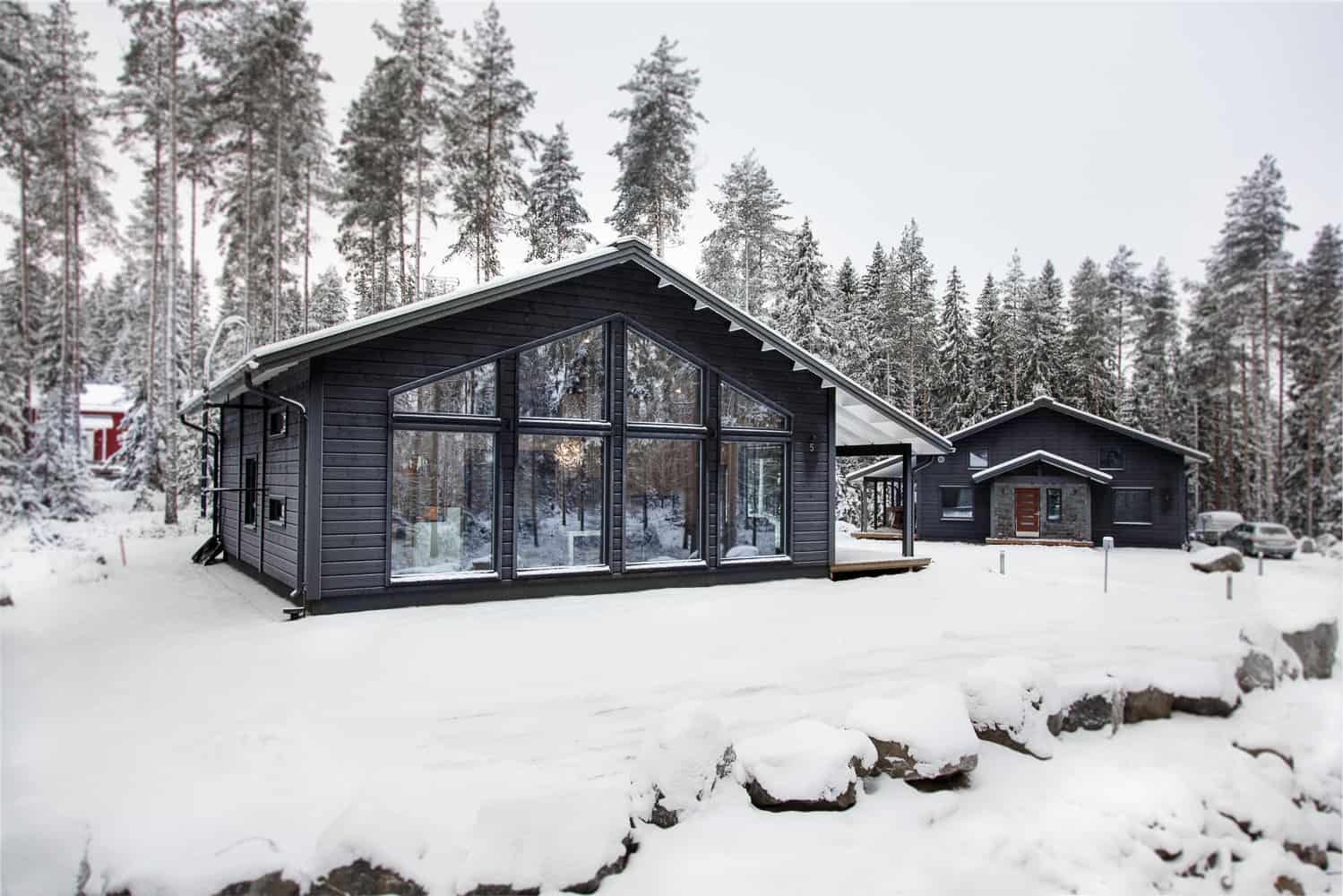
PolarHouse’s thermal log system is based on a vertical frame wall. In practice, this means the wall does not settle, not with seasonal changes, not over time.
Once a window is installed, it stays exactly in place for decades.
For the builder, this means:
• fewer worries about structural durability
• smoother, more predictable construction
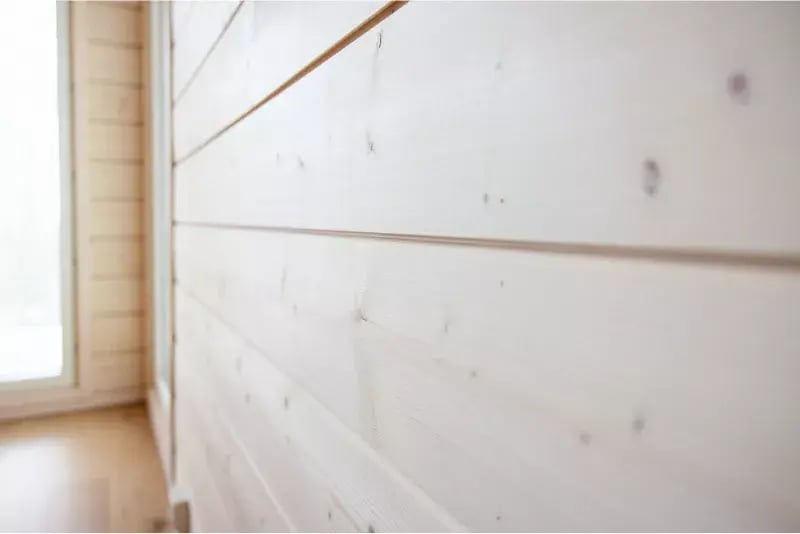
The thermal insulation capacity of a log wall depends largely on its thickness. Building regulations allow a maximum U‑value of 0.60 W/(m²K) for log walls.
For example, a 275 mm solid log typically achieves a U‑value of approx. 0.41. A thermal log structure, however, can reach as low as 0.17. Read more about the U-value and ecological properties of thermal log walls here.
The thermal log wall structure was developed to solve the biggest challenges of traditional logs: settlement and poor thermal insulation.
With a U‑value of 0.17 W/(m²K), a thermal log wall performs similarly to a solid log wall approximately 60 cm thick. The structure combines interior and exterior log panels with an effective, breathable insulation core.
For the builder:
• A warm, pre‑insulated wall reduces heating demand
• Lower heating costs year after year
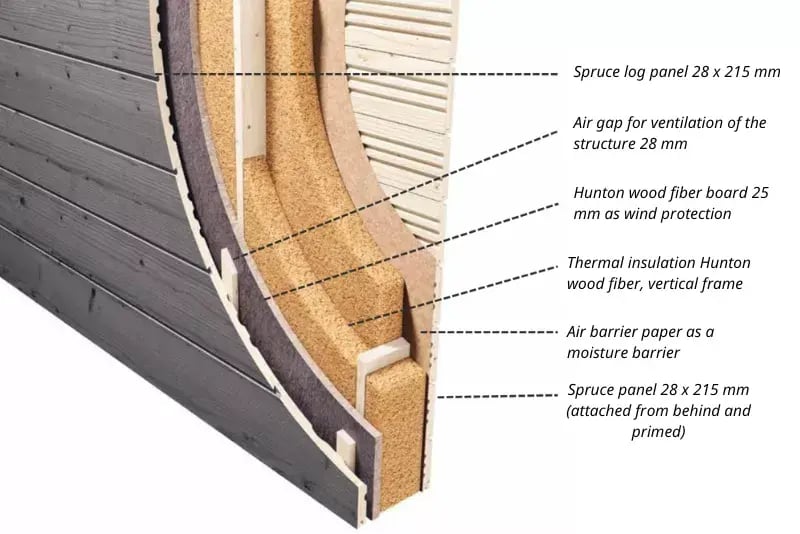
Thermal log walls “breathe” like real logs
Thermal log structures function like traditional logs in terms of moisture behaviour. Wood absorbs and releases moisture naturally, balancing indoor humidity. This supports respiratory health and enhances comfort.
Although the wall is airtight and energy‑efficient, it still breathes in a controlled way without losing heat.
For the builder:
• balanced indoor air
• confidence in healthy living
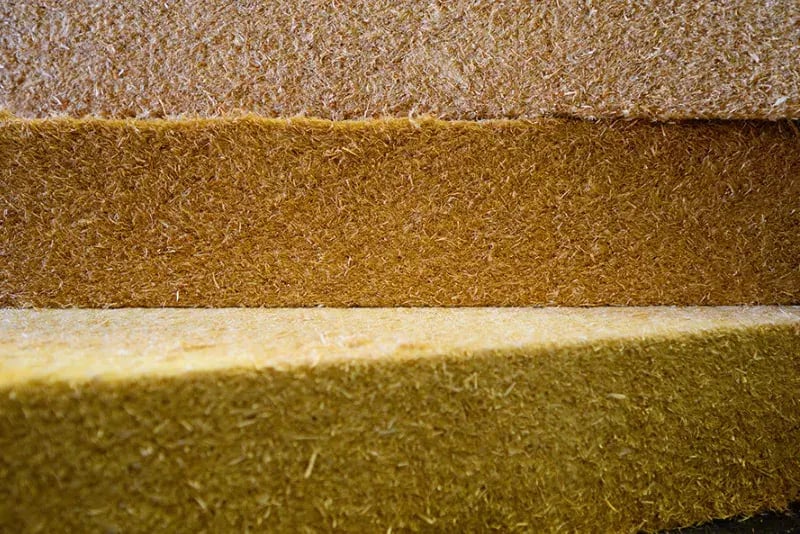
When wood fibre insulation and other wood‑based layers are used, the entire wall becomes a natural, single‑material structure. The wall remains airtight but breathable, and completely plastic‑free.
For the builder:
• a smaller carbon footprint
• natural comfort without drafts
In solid or laminated log houses, interior surfaces are typically wooden, which creates a coherent and natural look but also ties the interior to log‑house traditions. Adding white walls or acoustic panels usually requires extra layers.
A thermal log structure changes this entirely. Because the wall is non‑settling and technically modern, the interior surfaces can be anything you like – wood, paneling, or plasterboard treated with paint or wallpaper. This allows you to enjoy the look of a log house on the outside while having a modern interior, if you wish.
For the builder:
• more freedom in interior design
• possibility to combine traditional and modern aesthetics
PolarHouse has more than 25 years of experience in building homes and holiday cottages for demanding Nordic conditions. You don’t need to be a construction expert. We have solved many details for you and support you throughout the building process.
A thermal log structure combines the best features of log construction with modern building technology. It is non‑settling, energy‑efficient and breathable, offering peace of mind, lower heating costs and design freedom.
PolarHouse thermal logs are a smart choice when you want a durable and worry‑free home for decades.
Everything non-Finnish residents need to know – costs, permits, land, and common mistakesWritten for international buyers planning to build a home in...
If you are planning to build a house, you have almost certainly encountered the term U‑value. Simply put, the U‑value tells you how well a structure...
Finland is the most-forested country in Europe, and the Finns are experts at building their houses from wood. As timber construction techniques have...